Showing posts with label Studio: Scanbox. Show all posts

REVIEW: DVD Release: Ambush 1941


Film: Ambush 1941
Release date: 21st March 2011
Certificate: 15
Running time: 123 mins
Director: Olli Saarela
Starring: Peter Franzen, Irina Bjorklund, Kari Heiskanen, Taisto Reimaluoto, Kari Vaananen
Genre: Drama/War
Studio: Scanbox
Format: DVD
Country: Finland

Cinema has long been obsessed with war. For decades audiences have dined out on feasts of World War One and Two films, Vietnam movies, and more recently we’ve seen conflicts from the Middle East represented on the silver screen. Olli Saarela’s Ambush 1941 hits the home DVD market soon, bringing an unfamiliar war into our living rooms – the Continuation War between Finland and Russia.

In 1941, Finland is allied with Germany in the fight against the Russians. On the border, Lieutenant Eero Perkola (Peter Franzén) is awaiting the order for his platoon to head into the conflict.

As Eero and his platoon rest in a recently conquered village, he meets up with his fiancée Kaarina Vainikainen (Irina Björklund) – a nurse serving in the Women’s Auxiliary Corps. They spend their first night together after many apart – grateful that both have survived up to now.

Later, as Eero negotiates a return home for Kaarina, he volunteers to undertake a dangerous sortie into enemy territory: his platoon is to stage a reconnaissance mission searching for Russian positions in the wilderness near the Lieksa Lake.

During the course of the mission terrible news reaches Eero – news which has a devastating effect on his platoon, as he becomes increasingly indifferent about his own safety and that of his men…


The movie begins promisingly as Eero’s platoon reach the safety of a village with a hospital. Parking their bicycles (the preferred mode of transport for troops at the time), they seek respite from the fighting. Having already seen Eero gazing longingly at a photo of his lover, it is very apparent that their paths are set to cross very soon. And so it proves as they meet in the street.

Unfortunately, the love story between Eero and Kaarina fails to ignite the passion. A surprisingly tender and intimate sex scene is beautifully played and shot, but really it’s the only window we get into their relationship – other than some clunkily constructed flashbacks strewn haphazardly throughout the film. It’s underdeveloped and unsatisfying – a shame as Björklund seemed like a genuinely charismatic actress in the short time she spent on screen.

Perhaps as a result, it’s difficult to engage with Eero. He’s not an enormously pleasant character, and his humanity is only hinted at prior to him starting to emotionally unravel. With a not entirely convincing relationship as our only evidence of his caring nature, it’s hard to reconcile the idea of him as a heroic leader with the reality – that of a lieutenant who leads by example rather than through force of personality or charisma. The actor playing him, Peter Franzén, either performs extremely subtly or is rather inexpressive. It seems more like the latter until the film moves into the second half, when his emotions do become more apparent. Either way, it’s not a strong enough performance to carry the story, and the film suffers as a result.

The blame for that may lie partly in the scripting and direction of Ambush 1941. There’s a real lack of information as to what the character’s personal motivations are or – more importantly – what exactly the platoon’s mission is. The fact that the troops are rather rudderless undermines Eero’s position as leader. But it also undermines the clarity of the plot. Long before the end, the movie becomes unfocused – and it’s difficult to stay interested in a story which seems so aimless. It seems that prior knowledge of the Continuation War would have been beneficial. Perhaps the Finnish audience, for whom the film was originally intended, would be au fait with the details of the war, but for the uninitiated, it’s slightly confusing. Perhaps a few captions setting the scene prior to the action would have deepened the viewers’ understanding.

Although technically well made, it’s never a visually arresting film – it seems that Olli Saarela’s fall back technique when creating drama is to light his actors from underneath. It’s tried and tested but overused here. There are very few handsomely crafted scenes, but the few battles which take place employ far too much slow-motion. Strange cutaway scenes are also used within those fights – an idea which serves only to undermine any tension previously created.

Sadly, the majority of the other characters are just as difficult to warm to as Eero. The usual clichéd brigade of vulnerable youngsters, grizzled veterans and slightly unhinged soldiers form the core group around which the action centres. With such scant characterisation, it’s difficult to care what fate befalls them. It’s a major flaw of the movie that so little emotion can be invested in the men, and that lack of emotional involvement does the story a major disservice. Stronger, more believable characters might have papered over some of the cracks in the plot.

Not only are the platoon a predictable bunch, but so are some of the set-pieces. How many times have movie fans watched someone pinned down by enemy fire as their comrades struggle to help them? How many war movies have seen a prisoner of war become a cause of tension, arguments or violence? To its credit, Ambush 1941 certainly never shies away from portraying the brutal and cruel side of war. Unfortunately, whatever the film might have had to say about the Finnish/Russian conflict is lost amidst the hackneyed, colour-by-numbers approach to portraying the hardships and trials of war on screen.


A war movie with such a distinct focus on human drama needs to ensure that it can sustain the audience’s interest throughout. Despite featuring a ‘new’ conflict and some neat period touches, Ambush 1941 fails to grab the viewer. This kind of film has been made many times before – and often much more successfully. RW


NEWS: DVD Release: Ambush 1941


Finnish Second World War drama set in Russian Karelia, near the Finnish border.

Lieutenant Eero Perkola (Peter Franzen) is sent on a reconnaissance mission behind enemy lines, leaving his fiancee Kaarina Vainikainen (Irina Bjorklund) behind to serve in the Women's Auxilary Corps.

Later, when tragic news reaches the young lieutenant, he throws caution to the wind and becomes alarmingly oblivious to the safety and wellbeing of himself and his platoon.


Film: Ambush 1941
Release date: 21st March 2011
Certificate: 15
Running time: 123 mins
Director: Olli Saarela
Starring: Peter Franzen, Irina Bjorklund, Kari Heiskanen, Taisto Reimaluoto, Kari Vaananen
Genre: Drama/War
Studio: Scanbox
Format: DVD
Country: Finland

REVIEW: DVD Release: The Winter War


Film: The Winter War
Release date: 21st February 2011
Certificate: 15
Running time: 122 mins
Director: Pekka Parikka
Starring: Taneli Mäkelä, Vesa Vierikko, Timo Torikka, Heikki Paavilainen, Antti Raivio
Genre: Drama/History/War
Studio: Scanbox
Format: DVD
Country: Finland

The Winter War, or Talvisota in Finnish, is a classic war film which has gained something of a cult following, and has just celebrated its 21st birthday. Originally based on a book of the same name by writer Antti Tuuri, it is about a real battle, little-known outside Finland, which was fought during the start of the Second World War.

The film opens in 1939, in the house of Martti (Taneli Makela) and Paavo Hakala, two brothers who have just been called up to join the army. Russia, for the moment leaving Hitler to his own devices in Western Europe, has turned its sights on Finland. Stalin is set on world-domination and decides to start by taking a great swathe of Finland for himself. The Finns, unsurprisingly, are refusing to concede to his demands.

At first, it seems like an empty threat, so the brothers’ conscription into the army takes them only to training camps to practise manoeuvres. Here, it doesn’t matter so much that the Finnish army is appallingly under-resourced, but it soon becomes apparent that Stalin is serious when word comes that a huge number of Russian soldiers are on their way to launch an attack. Martti, Paavo and their new comrades must say goodbye to their families and leave to defend their homeland.

What follows is a David and Goliath scenario: the small band of Finnish men, poorly-resourced, with limited training, and must crouch in trenches, taking pot-shots at the advancing Russians. Stalin has sent tens of thousands of soldiers, along with tanks, aeroplanes and bombs. The Finns have the wrong-sized artillery cartridges and second-hand guns. They have to resort to setting light to Molotov cocktails to attack the Russian tanks, and inevitably suffer casualties and deaths. However, the Finns have a fierce love for their homeland, which somehow keeps them fighting against this inexhaustible enemy.

Martti becomes our primary focus, a tireless solider who keeps up the fight even as his friends are cut to pieces by shrapnel, or start to lose the plot. Even when the situation seems utterly hopeless, Martti and his remaining comrades never give up…


With this film, director Pekka Parikka aimed to provide a realistic portrayal of the battle, and to give the real-life soldiers who fought in those Finnish trenches the recognition from the wider world that they deserve. It certainly offers a different viewpoint of the early days of World War II than most war films portraying this era. Parikka manages to show vividly the brutal nature of warfare; it is not glamorous or even well-prepared. In this film, as no doubt it was in reality, it is brutal, freezing, filthy and soul-destroying. However, Parikka does manage to instil a quiet sense of heroism amongst all the horror and desperation. It is a faithful representation of real events which is not romanticised in any way, which is what this story deserves.

However, after the first two hours, the point has been made. Up until this time, you can appreciate the aims of the film, and understand the stark differences between the Russian and Finnish armies. We have seen soldiers die miserably in the trenches, the cramped living conditions they put up with, and we have witnessed numerous attacks and counter-attacks, complete with comedy deaths from the Russians. The fact is war is bursts of dramatic action, when the soldiers are actually in life-or-death situations, interspersed with long periods of tedium where nothing much really happens. When the arrival of a cat into the trench camp is the most exciting event for a long time - for both the soldiers and the viewer - it becomes difficult to maintain concentration. The film becomes hard work, and it continues for more than an hour longer – the total running time is three-hours-and-fifteen minutes. This is even longer than it sounds when you consider that in the first half of the film, the scenes of trench warfare were interspersed with scenes of family life, soldiers returning home on leave, training, and so on. In the second half, we are firmly in the trenches, trapped in a hopeless cycle of Russian advance and Finnish resistance.

It requires a steely determination on the part of the viewer to see this film through to the end, which is somewhat anti-climactic when it finally comes. Parikka’s aims with this film are laudable, and he has given a very honest, realistic portrait of the battle for Finland. It is a story that deserved to be told because the events on this side of Europe during the Second World War period have been greatly overlooked in cinema before and since. It is gritty and conveys a grim bravery far removed from some glossy Hollywood interpretations of this genre, which is effective. However, Parikka has focussed on this, making it as authentic as possible, at the expense of everything else. The acting is occasionally a bit wooden but the main problem is that it is just far too long without any strong subplot to drive it past the first half. War film enthusiasts will appreciate this film for the attention to detail in creating a realistic representation of an oft-forgotten war, but for everyone else, it’s a rather gruelling experience which is difficult to stick with until the end.


The Winter War portrays a raw and heroic struggle which will appeal to die-hard fans of the genre but will leave most viewers out in the cold. KS


NEWS: DVD Release: The Winter War


In the Winter of 1939-40, tiny Finland held back the might of the Soviet army which stormed Finland’s borders with massive tank and artillery firepower, a large air force, and well armed infantry.

The war continued relentlessly for 105 days, in extreme conditions, through an exceptionally cold and hostile winter. Against all odds, the Finns held strong, and the historic battle has come to be known as the Finnish Miracle.

Made in 1989, The Winter War was the first real, bloody, hard-hitter of a World War II movie. It inspired a new generation of war movie realism by recounting war from the soldier’s point of view; exposing their lives, their feelings, and the visceral experiences of the front-line.


Film: The Winter War
Release date: 21st February 2011
Certificate: 15
Running time: 122 mins
Director: Pekka Parikka
Starring: Taneli Mäkelä, Vesa Vierikko, Timo Torikka, Heikki Paavilainen, Antti Raivio
Genre: Drama/History/War
Studio: Scanbox
Format: DVD
Country: Finland

REVIEW: DVD Release: Verso


Film: Verso
Release date: 27th September 2010
Certificate: 15
Running time: 100 mins
Director: Xavier Ruiz
Starring: Laurent Lucas, Chloe Coulloud, Carlos Leal, Nicole Max, Julie Nicolet
Genre: Crime/Thriller
Studio: Scanbox
Format: DVD
Country: Switzerland/Luxembourg/Belgium

Xavier Ruiz's 2009 police thriller Verso arrives on DVD courtesy of Scanbox Entertainment in an effort to show that the 'peace capital' of Switzerland is anything but; where a hotbed of vice and sleaze act as the backdrop for revenge.

The story focuses on elite Geneva SWAT team member Alex Decker (Laurent Lucas), the aftermath of his divorce from former wife Clara (Nicole Max) and his attempts at regaining the affections of his estranged teenage daughter Lou (Chloé Coulloud). This is complicated, not only by Decker's married-to-the-job modus operandi – much to the dismay of his current girlfriend – but by the release of former SWAT member and Alex's best friend Victor (Carlos Leal) from prison.

A bit of a wild man back in the day, Victor - now free but relieved of duty - is soon back to his old tricks and firmly entrenches himself in the drug fuelled and prostitute garnished criminal underbelly of the city. Things take a turn towards the personal when Victor starts romantically seeing Decker's ex-wife, rekindling some unfinished business between the two men, as it was Decker who put Victor behind bars years ago for murder...


It's clear from the start that Verso is hell bent on dirtying up Switzerland's clean world image as evidenced in the film's opening volley of crime and vice themed statistics: seven hijackings in twenty years; one prostitute for every thirty inhabitants; one gun for every two citizens… You'd think that the streets of Geneva were literally clogged with whores and drugs, however, this doesn't stop Verso from being a rather routine and uninteresting cop movie.

It's all pretty business as usual; a seasoned professional spends all his time out in the field, leaving his home life to drift into social oblivion. His attempts to make amends for past neglect continually fall flat as circumstance and the job escalate to the point where estranged loved ones are sucked into danger only for the father/husband to redeem himself by saving their lives and solving the case. Verso sticks to this formula for the most part with the occasional detour into less chartered, but still underwhelming territory.

A confused and unfocused first act bows out to slightly more interesting and better developed second that confirms that the film won't be living up to the explosions and carnage depicted on its box art. In fact, despite a couple of SWAT team raids on drug labs and organised gangs, Verso offers almost nothing in terms of action set-pieces, rendering the film's packaging and marketing somewhat of a lie. Instead, the film opts to take a more psychological route, as Alex becomes more and more paranoid over Victor wanting revenge for past events but also has his own demons to contend with. Sadly, while the results are just about watchable, the film fails to take the more interesting developments of the second act to fuel what could've been a nail-biting and taut finale.

Another problem lies in Laurent Lucas' lacklustre and unengaging lead performance; displaying all the emotional range of a downtrodden face painted onto the side of an egg. Leal's portrayal of Victor is more successful but that's partly due to his character being more intriguing overall. Alex's angsty daughter Lou is agitating to watch; accusing her mother of being a whore for trying on some lipstick in a cosmetics store minutes after offering sexual favours to a drug dealer to pay for a score for herself and a friend.

If Verso has achieved anything in terms of updating Switzerland's quaint and peace loving image into that of a cultural and crime-ridden cesspit, it’s that the film successfully depicts almost everyone as sex-crazed scum. Two of Lou's friends decide to go at it in their inexplicably trendy drug-den hangout as Lou sits on the other end of the sofa trying to finish the film that they had started watching whilst Victor has a penchant for battering prostitutes (they are sub-human after all - in this film at least). Another baffling moment sees a guy called Steph – one of Lou's friends – drop trou in front of her face in a hope that she'll naturally get the message. She doesn't, and in a later scene, he tries to rape her. Verso seems to be operating within the misguided formula of: sexual violence = edgy and interesting cinema. This couldn't be further from the truth, and the results feel very self-conscious and a little juvenile (there's even a scene when Decker – the supposed hero of the story – forces himself on his own girlfriend).

If the film exceeds anywhere, it’s in the cinematography which, on the whole, is confident and stylish. Ruiz introduces the first police raid in tantalising fashion; a long, shallow focus shot of abstract nature featuring moving figures that approach the lens. They come into focus and reveal themselves as the SWAT team getting into position. Ruiz also condones further interesting visual flourishes during some fleeting cerebral sequences that worms the audience inside Alex's psyche as faded memories of a past tragedy take on a new lease of life. There's enough panache here to suggest that Ruiz and his crew are capable of better things if they had a stronger, more original script to work with.


Verso is a film that simultaneously feels like it’s trying too hard and not trying hard enough. Its confident visual presentation and attempts at intriguing character dynamics shown from both sides of the law - in a similar fashion to something like Michael Mann's Heat (1995) - are sabotaged by lazy performances, an uninspiring script, and an altogether tactless depiction of Switzerland's darker side. Had Ruiz's directing not been so heavy-handed and blatant, this could've been decent. Instead, we're left with something that's irksome and quite unremarkable. MP 
 

REVIEW: DVD Release: Backyard


Film: Backyard
Release date: 27th December 2010
Certificate: 18
Running time: 117 mins
Director: Carlos Carrera
Starring: Ana de la Reguera, Asur Zagada, Marco Perez, Joaquin Cosio, Alejandro Calva
Genre: Crime/Drama/Mystery/Thriller
Studio: Scanbox
Format: DVD
Country: Mexico

Backyard is a fictionalised version of events that actually occurred in a small Mexican/American border known as Ciudad Juarez. The film covers similar ground to The Virgin Of Juarez and the better known Bordertown. In Backyard, though, Director Carlos Carrrera attempts to take a grittier, more realistic approach to telling the story.

Juarez is one of many Mexican border cities sustained by American-owned factories, or ‘maquiladoras’, that sprang up on the Mexican side of the border after the NAFTA agreement went into effect. Populated by blue collar and migrant workers, corruption has invaded every level of society, from indolent municipal executives to casual labourers who lack the intelligence to benefit from their skills and work ethic, and merely support the one sided way of life. Women are on the bottom rung, subjugated by all, including themselves, but especially by significant others and guardians gripped by all sorts of appetites.

In a stereotypically corrupt local system, one police officer, Blanca Bravo (played with a serious intensity by Ana de la Reguera) challenges the status quo. A system which tolerates and ignores the routine misogynistic beating and murders of young women.

As the story unravels, we see Blanca’s crusade for justice slowly deteriorate into a thirst for vengeance, as she faces up to the maddeningly low priority the system has given to solving and stopping these crimes…


Backyard is a strange film. The ‘true story’ tag always ensures films are viewed perhaps that little more critically and, at times, it just doesn’t stand up to the levels of scrutiny applied. There are so many inconsistencies in quality that it beggars belief.

There are some genuinely ingenious, if obvious, touches - Carrera’s apparent dismay at the continual Americanisation of the border towns manifests itself through the ‘Gringoismo’ of the antagonists. Many of the films most heinous characters speak English and are of a markedly lighter complexion to the rest of the cast. One particular scene, which shows a young girl strangled to death during penetration to induce a change in vaginal pressure (an act portrayed as apparently widespread and common) is a truly gut wrenching and heartbreaking moment.

Unfortunately, while some scenes are tremendously evocative, and play as a genuine reminder that the real world can be just as evil and terrifying as any fictitious one, the remainder of the film’s conscience is shouted down. Drowned out by inane dialogue, contrived essays at violence-threatening tension, and a sour desert-sepia colour scheme that seems better suited to lower-echelon, late night TV-crime melodramas. Bravo’s superior’s assertion that "women make good nurses and bad cops!" is as cheesy and lazy a line as you’ll find in a film this year.

This inconsistency filters through every aspect of the film. While many of the victims are portrayed as well rounded three-dimensional characters, too many are shallow ‘Tex Mex’ caricatures. While Reguera’s performance is excellent, the path her character follows is too contrived and well trodden. Barrera may be on record as saying that Backyard is not entertainment, but he would be hard pushed to deny that some of the major aspects of the film - Jimmy Smits’ chewing scenery, or even An de la Reguera herself (her beautiful but determined police woman would fit right in with many of today’s police procedurals - CSI, Law & Order) are lifted straight from the ‘Big Book’ of Hollywood clichés.

Backyard is a film that could have been so much more than it is. While it times persuasively, and sensitively highlights the ignored plight of many young Mexican women ensnared in a chronic and sometimes terminal cycle of hard labour and machismo battering, the potentially thousands of Juarez victims deserve more than cartoonish stereotypes.


While it’s hard to argue with Ana de la Reguera’s performance, one can’t help wondering if this film would have benefited from a heroine that didn’t take makeup and modelling classes while attending police academy. An important story told badly. PD


NEWS: DVD Release: Backyard


Mexican filmmaker Carlos Carrera directs this fictionalised account of the unsolved rapes and murders of hundreds of women in the violent Mexican border town of Ciudad Juarez.

Since the mid-1990s, young women have been mysteriously disappearing in and around the town, only to turn up later as corpses in the surrounding desert, having been raped and murdered. Most of the victims are low-paid workers drawn to the town by the possibility of work at American-owned factories.

When Mexican police officer Blanca Bravo (Ana de la Reguera) is drafted in to investigate the situation, she runs into resistance from the authorities and local businessmen.


Film: Backyard
Release date: 27th December 2010
Certificate: 18
Running time: 117 mins
Director: Carlos Carrera
Starring: Ana de la Reguera, Asur Zagada, Marco Perez, Joaquin Cosio, Alejandro Calva
Genre: Crime/Drama/Mystery/Thriller
Studio: Scanbox
Format: DVD
Country: Mexico

REVIEW: DVD Release: Velvet Revolution


Film: Velvet Revolution
Release date: 1st November 2010
Certificate: 15
Running time: 111 mins
Director: Oleg Stepchenko
Starring: Alexey A. Petrukhin, Aleksey Kravchenko, Aleksandr Karpov, Oleg Taktarov, Michael Madsen
Genre: Action/Crime/Drama
Studio: Scanbox
Format: DVD
Country: Russia

Fledgling Russian director Stepchenko tackled that ‘difficult second movie’ phase with this frenetic crime film. Delving deep into the soviet drug trade, his film is a curious mix of action and film noir.

Major Vershinin is a cop dedicated to toppling the crime in his district. A loose cannon with a dark past, he focuses all his energies on the capture of two mob lieutenants, Pike and Rock.


After a botched operation at an American football game, Vershinin begins to doubt his own capabilities, and suspects someone has been plotting against him - every step of the way.

Vershinin must contend with a drug addled wife and his daughter’s hedonistic lifestyle, while at the same time attempting to thwart the plans of crime kingpin Kurkov and his dealings with an American drug lord and a mysterious benefactor. He must do this under the watchful eye of Suvorovtsev, a new partner assigned to keep him in check...


Michael Madsen used to be a big pull back when the memories of psychopathic killer Mr. Blonde (Reservoir Dogs) were still fresh in the collective film going mind. Now his presence on the cast list of any film usually indicates a production lacking in quality. This may seem like unfair stereotyping of a jobbing actor, but, sure enough, Velvet Revolution starts off with a short cameo from Madsen and from then on, it’s all downhill.

Attention deficit editing makes the films opening act nigh on unbearable for anyone wanting any semblance of story or character introduction. Stepchenko bombards us with firecracker imagery and lightning fast location changes handled with all the finesse of a golf club to the head (which may or may not happen in the film’s opening moments, it all depends on your ability to not blink).

The film slows down a bit as we are introduced to Vershinin, who is played with little subtlety by Aleksey Kravchenko. This is a considerable shame because it is Kravchenko who so impressed in the 1985 masterpiece Come And See - here he uncomfortably spits out samples of the hackneyed script and makes an occasional stab at playful comedy.

Velvet Revolution’s key failing is its confused identity. Vershinin’s world-weary narration and troubled family life have an air of noir-ish cop drama, while interludes of playful bickering between himself and Suvorovtsev suggest a buddy comedy. As the confused story draws on, we enter Bond-style action territory, complete with nefarious evil schemes and overblown action set pieces. It’s difficult to pin down the film’s motives, as most of the time it doesn’t seem to have any.

The cast are patchy across the board, with Kravchenko giving a confused central performance replete with forced emotional outbursts and posturing. Alexey Petruhkin is a bit more engaging, perhaps because the script requires nothing more from him than stoicism. Anna Chipovskaya and Viktoriya Tolstoganova are good value as Vershinin’s misanthropic daughter and junkie wife respectively, but they aren’t given enough screen time to make enough of an impact.

Action fans won’t be disappointed; explosions come thick and fast and serve to break the monotony. A skirmish in an underground drug lab is one particular highlight, which manages to throw an awkward phone conversation and a couple of chickens into the fray. It seems Stepchenko is adept at overseeing a great shootout, but flounders when it comes to orchestrating a decent exchange of dialogue.


Some solid action aside, Velvet Revolution fails to do anything but bore with its one-dimensional characters and convoluted plotting. There is a pre-credit dedication to those who “stand guard over the future of our children,” suggesting a message lost amidst all the frantic edits and bad acting - and highlighting the muddled tone of Stepchenko’s film. KT


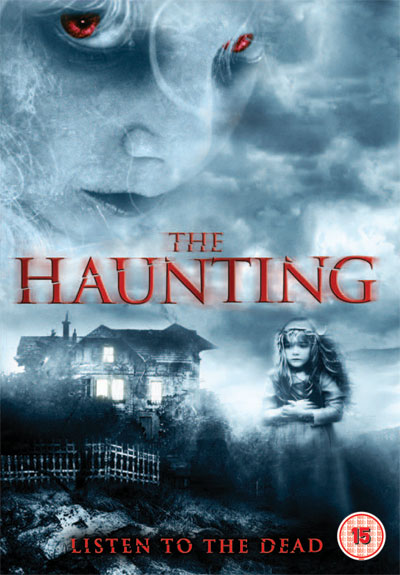
REVIEW: DVD Release: The Haunting


Film: The Haunting
Release date: 25th October 2010
Certificate: 15
Running time: 120 mins
Director: Elio Quiroga
Starring: Ana Torrent, Francisco Boira, Hector Colome, Rocio Munoz, Francisco Casares
Genre: Horror/Mystery
Studio: Scanbox
Format: DVD
Country: Spain

Elio Quiroga’s The Haunting, also known as No-Do and as The Beckoning, represents another drop in the torrent of Spanish supernatural horror that’s burst through the riverbank of international cinema awareness. Arriving on the heels of higher profile releases such as fellow haunted house romp The Orphanage (2007), straight up Spanish shocker [Rec] (2007) and this year’s similarly styled Hierro, does The Haunting have what it takes to make an impact in a rapidly overcrowded market?

When paediatrician Francesca (Ana Torrent) starts to suffer from postpartum depression after the birth of her new son, her friend and hospital psychiatrist Jean (Rocío Muñoz) recommends a change of scenery. Francesca and her husband Pedro (Francisco Boira) are shown around a spacious country house that was formerly a school owned by the priesthood. They fall in love with it and move in straight away.

After experiencing nightmarish visions of ghostly apparitions, Francesca starts to get more and more obsessed with the safety of her baby, prompting further concern from her husband and Jean as she seemingly slips deeper and deeper into madness.

Meanwhile, Miguel (Héctor Colomé) a psychiatrist priest, discharges a patient whose spent the last fifty years in a catholic institution as he tries to come to terms with the secrets of No-Do; a religious experiment that occurred in Francesca and Pedro’s home decades ago…


If the storyline of The Haunting sounds familiar to you, that’s because it pretty much follows almost every standard plot point synonymous with its genre: a young family move into a big empty house (usually out in the sticks) where, unbeknownst to them, evil things occurred many years ago but still resonate in the form of noises, ghosts and so on. Due to a past personal trauma, one of the family – almost always the wife – has the unexplained ability to see and interact with said spectres, and feels some form of duty to put the spirits to rest. Naturally, no-one believes her except for some old hermit or religious type, ostracised from everyone due to crackpot supernatural theories of cults and evil goings on. The ensuing investigation is fleshed out with some obligatory searching around dark spaces with a flashlight and a research montage involving old newspaper articles where the hellish past of the property is slowly revealed. Unfortunately, The Haunting is the kind of film where you can guess the outcome and the intervening twists and turns simply by watching the trailer.

The cast do what they can with Quiroga’s formulaic script, but performances all round never really catch light. Torrent’s psychological journey from depressed mother to haunted and borderline insane person is not very compelling, and pales in comparison to many other similarly structured performances. Her conversations with her 10-year-daughter Rosa while Pedro’s out of the house feel very contrived. From their first scene together, it’s painfully obvious that Rosa isn’t alive and only Francesca can see her. To the film’s credit, this isn’t kept a secret for too long, but it’s uneventful nonetheless and ultimately annoying, as Francesca frantically searches the house for someone that everyone – including herself – knows does not exist.

Francisco Boira’s Pedro is severely underwritten, and is limited to the role of concerned husband. Héctor Colomé’s Priest Miguel offers more intrigue, but is again repressed by a rather flat and unimaginative script – finding a huge piece of the No-Do puzzle by easily letting himself into a special room within the catholic inner-sanctum, even though this is deemed forbidden with penalty of excommunication. The evidence itself – a reel of old film footage – is neither destroyed nor particularly well hidden as you might expect; the filmmakers choosing to leave it lying around on a dusty shelf for anyone with access to the room to see.

Camerawork is slick but not especially creative. The film adds some inventive touches by using seemingly old newsreels and other weathered footage to provide pieces of the puzzle, as well as flashbacks that try to maintain a similar aesthetic by incorporating faux print damage. Sometimes, these flecks and scratches appear over shots of the main storyline to segway into the flashback, which looks a little amateurish and kills any attempts of immersion. The ghost effects are equally suspect; crude now-you-see-them-now-you-don’t computer generated zephyrs that do little more than float about and pull scary faces - not to mention showing up the limitations of the film’s budget.

The film does little in terms of generating tension of scares, coming to a hilt when Francesca wanders around the house by herself with a torch; a tour which naturally takes her to the building’s darkest recesses, such as the basement, where the evil things happened.

The Haunting, then, is a film that hinges on creating a thick and creepy atmosphere as opposed to using shock tactics. Unfortunately said atmosphere, whilst present, is rather stale overly familiar. The musical score does little to elevate this, and the occasional presence of blatant filler shots – presumably used to stitch together the remnants of what was originally a much longer cut – cries made-for-TV, as do the clichéd fireworks of the film’s ending.


The Haunting is what it is: just another haunted house flick, and is totally forgettable as a result. It’s predictable, unoriginal, bland and a chore to watch. Although it’s commendable that writer/director Elio Quiroga is more interested in classic horror design than copious gore, this enthusiasm simply does not translate to the screen, rendering The Haunting a stuffy and tedious saga that offers nothing that hasn’t been seen or done before. MP

REVIEW: DVD Release: Humains


Film: Humains
Release date: 9th August 2010
Certificate: 18
Running time: 84 mins
Director: Jacques-Olivier Molon & Pierre-Olivier Thevenin
Starring: Lorànt Deutsch, Sara Forestier, Dominique Pinon, Manon Tournier, Élise Otzenberger
Genre: Action/Adventure/Horror/Thriller
Studio: Scanbox
Format: DVD
Country: France/Switzerland/Luxembourg

After running the harsh gauntlet of critical abuse during its theatrical release in Europe, where it was routinely and universally panned, Humains finally limps onto DVD courtesy of Scanbox Entertainment, but is it as atrocious as everyone claims?

When anthropology professor Schneider (Philippe Nahon) discovers a site in the Swiss Alps containing human remains that currently defy all current theories on human evolution, he assembles a team to investigate. Schneider, along with his reluctant son Thomas (Lorànt Deutsch), is joined by one of the professor’s assistants, Nadia (Sara Forestier), for the expedition.

They set off up winding mountain roads where they come across a family of tourists that, coincidently, Nadia had encountered on a proceeding train journey. Gildas (Dominique Pinon), his life partner Patricia (Élise Otzenberger) and their daughter Elodie (Manon Tournier) hitch a ride with the researchers after experiencing car trouble.

After a momentary lapse in concentration, Thomas loses control of the vehicle, causing it to plummet down the mountainside, killing his father. The rest of the group survive, but are now trapped in the gorge. As they find a way out, they soon realise that they are not alone…


In response to the question posed in the opening paragraph: is Humains as atrocious as everyone claims? The answer has to be yes as Humains is a bland and dire attempt at horror filmmaking that simply boggles the intelligence. It’s irredeemable in almost every single way, and fails to muster even the bare minimum of comforting escapism that many lacklustre films are still able to achieve. This is due to a rather flat and lazy script that’s further damaged by sloppy execution.

Performances aren’t dreadful but certainly fail to rise above the limits of script functionality. Nahon’s Schneider – the curmudgeonly mentor whose involvement in the plot is cut short dramatically – is played just how you’d expect. Forestier’s token hot lab assistant routine does little to go beyond that pretence, neither does Deutsch playing the handsome, introverted old friend of said hot lab assistant who, as one would guess, is hopelessly infatuated with her – not that he’d admit it, of course.

As for the tourist contingent: Jean-Pierre Jeunet regular Dominique Pinon is surprisingly non-engaging considering his rich back catalogue of interesting characterisations – including his wheelchair-bound space pirate in Alien Resurrection (1997) – contributing little to the cast dynamic. His partner Patricia does little more than complain, whilst his teenage daughter Elodie is typically angsty.

The script bumbles along with a distinct lack of purpose. Nothing of note occurs until halfway through, with exception to a spectacularly bad car crash where the CGI rendered vehicle drives off the mountain road and falls into the gorge – if you’re going to drive a car off the side of a mountain, what’s wrong with gravity? To make things even more illogical; you’d think none of the cast would have faces left after such a horrific, mountain plummeting accident, but they all walk away from it with only a few lacerations and a hurt shoulder. Schneider’s death is highly dubious as his body has somehow been magically transported a fair distance away from the wreck, and to think if he stayed in the semi crushed vehicle, he would’ve survived. Another questionable moment sees the group crossing a river with a strong current by wading through it with the assistance of a rope that’s tied across. Patricia gets hit by a piece of driftwood and loses grip, prompting the usual pursuit along the riverbank to rescue her. Thomas is able haul her out, but it turns out Nadia was also swept by the current, not that you see that happening, nor was she in the water or visibly part of the collision.

This motif of shoddiness infects other elements of production, such as the editing, which is clumsy to say the least. Scenes end abruptly or with cheap and tiresome looking fades to black, paying absolutely no attention to the emotional resonance of the moment - not that the thin script permits it anyway. Sometimes it’s nice to linger after a final exchange of information for a beat or two to allow the audience to absorb what’s been divulged. That doesn’t happen here, instead one gets the impression that the filmmakers are trying to get through this ordeal as quickly as possible, which is commendably merciful in retrospect.

Camerawork is acceptable but not exemplary, and the film’s score is equally mediocre, failing to stir any kind of excitement or tension, which is sacrilege considering that this is supposed to be a horror film. Humains has absolutely no scares on account of each scene being poorly paced and executed. It also has a distinct lack of moments that are even designed to be scary, and only a few shocks come in the form of sporadic moments of violence which offers nothing new in an already violent and overcrowded genre - and bears almost laughable results. The antagonists – a tribe of cliff-faced Neanderthals – feel ill-conceived and half-baked, performing the usual foliage rustling and bow and arrow games that’s been seen time and time again. Even the muddled and badly executed perception shift/role reversal in the final act fails to elevate them beyond being dirty men in rags.


There are only so many ways you can say that this film is terrible without sounding overly pejorative, but for resolution’s sake: Humains is an amateurish mess of a production that fails in almost every filmmaking discipline. To hate it would be a waste of energy as what transpires is so bland and uninspiring that to have any strong emotional response to it is tantamount to crying over spilt nothingness. It really isn’t worth it, and it certainly isn’t worth your time or your money. Humains is one to avoid. MP


NEWS: DVD Release: Verso


Gritty crime thriller by Swiss director Xavier Ruiz.

Set in Geneva, the film stars Laurent Lucas as divorced and disillusioned SWAT policeman Alex Decker, who must fight to keep his teenage daughter Lou (Chloe Coulloud) out of harm’s way after his estranged ex-wife begins a relationship with a member of the local mafia.


Film: Verso
Release date: 27th September 2010
Certificate: 15
Running time: 100 mins
Director: Xavier Ruiz
Starring: Laurent Lucas, Chloe Coulloud, Carlos Leal, Nicole Max, Julie Nicolet
Genre: Crime/Thriller
Studio: Scanbox
Format: DVD
Country: Switzerland/Luxembourg/Belgium