


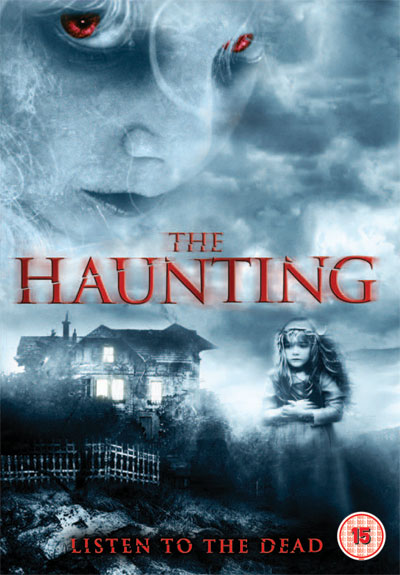
Film: The Haunting
Release date: 25th October 2010
Certificate: 15
Running time: 120 mins
Director: Elio Quiroga
Starring: Ana Torrent, Francisco Boira, Hector Colome, Rocio Munoz, Francisco Casares
Genre: Horror/Mystery
Studio: Scanbox
Format: DVD
Country: Spain
Elio Quiroga’s The Haunting, also known as No-Do and as The Beckoning, represents another drop in the torrent of Spanish supernatural horror that’s burst through the riverbank of international cinema awareness. Arriving on the heels of higher profile releases such as fellow haunted house romp The Orphanage (2007), straight up Spanish shocker [Rec] (2007) and this year’s similarly styled Hierro, does The Haunting have what it takes to make an impact in a rapidly overcrowded market?
When paediatrician Francesca (Ana Torrent) starts to suffer from postpartum depression after the birth of her new son, her friend and hospital psychiatrist Jean (Rocío Muñoz) recommends a change of scenery. Francesca and her husband Pedro (Francisco Boira) are shown around a spacious country house that was formerly a school owned by the priesthood. They fall in love with it and move in straight away.
After experiencing nightmarish visions of ghostly apparitions, Francesca starts to get more and more obsessed with the safety of her baby, prompting further concern from her husband and Jean as she seemingly slips deeper and deeper into madness.
Meanwhile, Miguel (Héctor Colomé) a psychiatrist priest, discharges a patient whose spent the last fifty years in a catholic institution as he tries to come to terms with the secrets of No-Do; a religious experiment that occurred in Francesca and Pedro’s home decades ago…
If the storyline of The Haunting sounds familiar to you, that’s because it pretty much follows almost every standard plot point synonymous with its genre: a young family move into a big empty house (usually out in the sticks) where, unbeknownst to them, evil things occurred many years ago but still resonate in the form of noises, ghosts and so on. Due to a past personal trauma, one of the family – almost always the wife – has the unexplained ability to see and interact with said spectres, and feels some form of duty to put the spirits to rest. Naturally, no-one believes her except for some old hermit or religious type, ostracised from everyone due to crackpot supernatural theories of cults and evil goings on. The ensuing investigation is fleshed out with some obligatory searching around dark spaces with a flashlight and a research montage involving old newspaper articles where the hellish past of the property is slowly revealed. Unfortunately, The Haunting is the kind of film where you can guess the outcome and the intervening twists and turns simply by watching the trailer.
The cast do what they can with Quiroga’s formulaic script, but performances all round never really catch light. Torrent’s psychological journey from depressed mother to haunted and borderline insane person is not very compelling, and pales in comparison to many other similarly structured performances. Her conversations with her 10-year-daughter Rosa while Pedro’s out of the house feel very contrived. From their first scene together, it’s painfully obvious that Rosa isn’t alive and only Francesca can see her. To the film’s credit, this isn’t kept a secret for too long, but it’s uneventful nonetheless and ultimately annoying, as Francesca frantically searches the house for someone that everyone – including herself – knows does not exist.
Francisco Boira’s Pedro is severely underwritten, and is limited to the role of concerned husband. Héctor Colomé’s Priest Miguel offers more intrigue, but is again repressed by a rather flat and unimaginative script – finding a huge piece of the No-Do puzzle by easily letting himself into a special room within the catholic inner-sanctum, even though this is deemed forbidden with penalty of excommunication. The evidence itself – a reel of old film footage – is neither destroyed nor particularly well hidden as you might expect; the filmmakers choosing to leave it lying around on a dusty shelf for anyone with access to the room to see.
Camerawork is slick but not especially creative. The film adds some inventive touches by using seemingly old newsreels and other weathered footage to provide pieces of the puzzle, as well as flashbacks that try to maintain a similar aesthetic by incorporating faux print damage. Sometimes, these flecks and scratches appear over shots of the main storyline to segway into the flashback, which looks a little amateurish and kills any attempts of immersion. The ghost effects are equally suspect; crude now-you-see-them-now-you-don’t computer generated zephyrs that do little more than float about and pull scary faces - not to mention showing up the limitations of the film’s budget.
The film does little in terms of generating tension of scares, coming to a hilt when Francesca wanders around the house by herself with a torch; a tour which naturally takes her to the building’s darkest recesses, such as the basement, where the evil things happened.
The Haunting, then, is a film that hinges on creating a thick and creepy atmosphere as opposed to using shock tactics. Unfortunately said atmosphere, whilst present, is rather stale overly familiar. The musical score does little to elevate this, and the occasional presence of blatant filler shots – presumably used to stitch together the remnants of what was originally a much longer cut – cries made-for-TV, as do the clichéd fireworks of the film’s ending.
The Haunting is what it is: just another haunted house flick, and is totally forgettable as a result. It’s predictable, unoriginal, bland and a chore to watch. Although it’s commendable that writer/director Elio Quiroga is more interested in classic horror design than copious gore, this enthusiasm simply does not translate to the screen, rendering The Haunting a stuffy and tedious saga that offers nothing that hasn’t been seen or done before. MP


